Crime story, How lottery security chief Eddie Tipton rigged a $16.5 million draw and was caught by two words
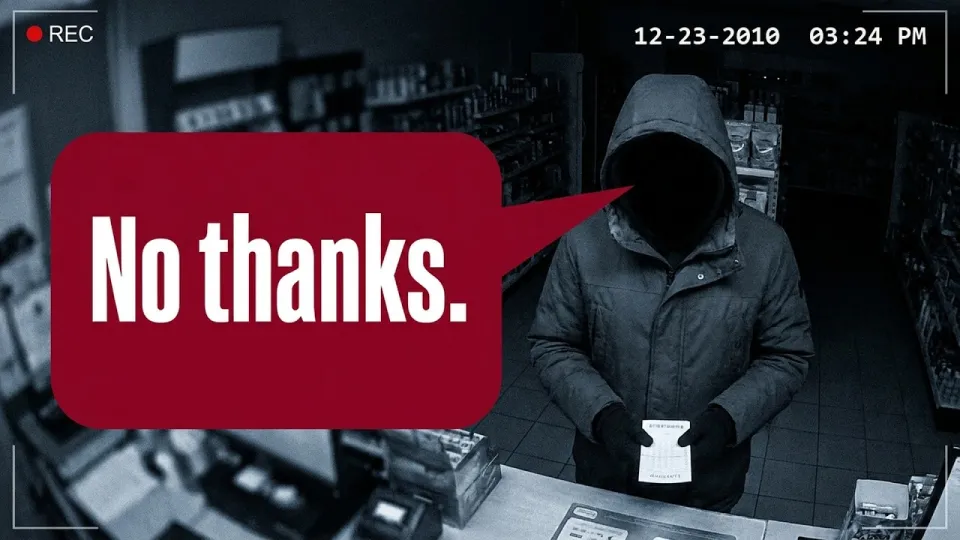
Video: He Rigged the Lottery. Two Words Gave Him Away. (crime story)
· based on the channel Max Crime
The crime story of Eddie Tipton is the case of a lottery insider who wrote the code that picked winning numbers and then used it for himself. As information security director at the Multi-State Lottery Association (MUSL), Tipton helped run games such as Hot Lotto — and was barred from playing them. A $16.5 million Hot Lotto ticket bought in Des Moines in December 2010, a store recording, and two ordinary words, "No thanks," undid him.
What happened in the Hot Lotto rigging case
On 29 December 2010, a Hot Lotto ticket sold at a Des Moines convenience store matched the winning combination for a $16.5 million jackpot. Under Hot Lotto rules of the time, the winner had to come forward within a year of the draw. Nobody did — not for weeks, not for months. The prize sat unclaimed while the Iowa Lottery ran public appeals, and the silence itself became the story: a life-changing sum and no one willing to put a name to it.
What the public did not know was that the ticket's buyer had a reason to stay hidden. The man was not an ordinary player who had gotten lucky; he was one of the people responsible for the integrity of the game. The unclaimed jackpot turned a routine draw into a fraud investigation that would eventually reach two computers kept off the internet, a rootkit hidden in lottery code, and draws in several states.
Who Eddie Tipton was and why he could not play
Eddie Tipton was the information security director at MUSL, the Iowa-based organization that supplies random number generators and drawing services to member state lotteries. In practice, that meant he had access to the systems that produced winning numbers — the very definition of a person who must never buy a ticket.
- Role: security chief responsible for protecting the randomness and integrity of lottery draws.
- Access: he wrote and maintained code used by the random number generators behind games such as Hot Lotto.
- Prohibition: MUSL employees and their relatives were expressly forbidden from playing member lottery games.
- Conflict: the same technical knowledge that made him valuable made him capable of predicting or steering results.
That combination — inside access plus a strict no-play rule — is why investigators looked inward once the Hot Lotto ticket became a problem rather than a celebration.
The anonymous trust and the claim deadline
In late December 2011, with the one-year deadline hours away, a lawyer walked into Iowa Lottery headquarters on behalf of a newly created anonymous trust and presented the winning ticket. The claim arrived with just over an hour to spare. Under Iowa law at the time, a trust could claim a prize without publicly naming its beneficiary, so the lottery had little choice but to begin processing a $16.5 million payout to a claimant nobody could see.
That anonymity is what turned suspicion into procedure. Lottery officials and investigators began asking who was behind the trust, why the ticket had been held for almost twelve months, and why the buyer had been so careful. The answers would not come from the paperwork. They came from a camera.
Two words that gave him away
Investigators obtained the convenience store's surveillance video from the night of the purchase and, in 2014, released it publicly in an edited form. It shows a man buying the ticket and then being asked whether he wanted to be a player in a related game or promotion. His reply — "No thanks" — was unremarkable in itself. What mattered was everything around it.
Coworkers who saw the footage recognized the man's voice and the way he moved. The clip did not need a confession; it needed an audience that knew him. Once Tipton was identified as the likely buyer, the timeline of the claim, the trust, and his position at MUSL locked together.
How the rigged random number generator worked
At the heart of the case was not a bribed clerk or a stolen ticket but software. According to the prosecution and Tipton's later plea, he inserted malicious code into the random number generator used to draw winning numbers. The scheme rested on a few deliberate design choices:
- A trigger based on time. The altered code was written to behave normally on most days and to produce predictable numbers only on specific dates, so routine testing would not expose it.
- Isolated machines. The generators were kept on computers deliberately disconnected from the internet, which limited outside tampering but also meant the code had to be introduced physically or through trusted updates.
- A hidden footprint. Investigators later described a rootkit-style component designed to cover the code's tracks, making the manipulation hard to detect from ordinary logs.
- Draws across states. The same generators served multiple lotteries, so a single rigged draw could produce winners in more than one jurisdiction.
The result was a fraud that looked like luck from the outside and required deep technical knowledge to pull off from the inside.
The trial, the deadline appeal and the guilty plea
Tipton was charged in Iowa, and the case produced two separate legal fights. The first was the criminal trial over the Hot Lotto ticket and the rigged draws. The second was procedural: after his conviction, his lawyers argued on appeal that the charge had been filed outside the statute of limitations. The Iowa Supreme Court addressed that question in State v. Tipton, No. 15-1515, and the dispute over timing became as closely watched as the underlying fraud.
In 2017, Tipton pleaded guilty to manipulating the code used to generate winning numbers, admitting that he had altered the random number generator rather than simply exploiting his knowledge of it. He was sentenced to up to 25 years in prison and ordered to pay restitution. The $16.5 million Hot Lotto prize itself was never paid on that claim.
Why this crime story still matters
Lottery security depends on a simple promise: the numbers are random and no one can influence them. Tipton's scheme broke that promise from the inside, using the authority meant to protect the draw. The case changed how lotteries audit their random number generators, how strictly insider play is policed, and how much weight investigators give to ordinary footage — a camera recording roughly one second of every minute in a draw room, and a store video in which two words did more than any confession.
Max Crime's breakdown follows the case in order, from the unclaimed ticket to the 2017 plea, and shows how a security expert with the keys to the system was caught by the smallest details: his voice, his walk, and a polite "No thanks."
Frequently asked questions about the Eddie Tipton lottery scandal
This crime story raises obvious questions about how one employee could compromise draws used by multiple states, what the rigged code actually did, and what happened to the money. The key facts are that Tipton had legitimate access to the random number generators, that the manipulation was designed to stay dormant on most days, and that the $16.5 million Hot Lotto prize was never paid. His 2017 guilty plea ended the criminal case and led to a prison sentence of up to 25 years.
Key takeaways
- Eddie Tipton was information security director at the Multi-State Lottery Association, the body that runs Hot Lotto draws for member lotteries.
- A Hot Lotto ticket bought in Des Moines in December 2010 won a $16.5 million jackpot that went unclaimed for nearly a year.
- A lawyer turned the ticket in for an anonymous trust with just over an hour to spare before the claim deadline.
- Investigators released store CCTV in 2014; coworkers recognized Tipton's voice and the way he moved.
- Tipton pleaded guilty in 2017 to manipulating the random number generator code and was sentenced to up to 25 years in prison.
Source: He Rigged the Lottery. Two Words Gave Him Away. (crime story) · Markdown version
Questions & answers
How did Eddie Tipton rig the lottery?
Tipton used his position as information security director at the Multi-State Lottery Association to insert malicious code into the random number generator that produced winning numbers. The altered code was designed to behave normally on most days and to output predictable numbers on specific dates, then hide its traces. Investigators later described a rootkit-style component built to conceal the manipulation.
How was Tipton caught?
A store surveillance video of the ticket purchase was released publicly in 2014. Coworkers recognized the man's voice and the way he moved, and his reply of "No thanks" when offered an additional game became a signature detail. Combined with the anonymous trust that claimed the prize just before the deadline, the footage pointed investigators to Tipton.
Was the $16.5 million Hot Lotto prize paid out?
No. The ticket was presented through an anonymous trust with just over an hour left before the one-year claim deadline, but the prize was never paid on that claim. Tipton was later ordered to pay restitution as part of his sentence.
What sentence did Tipton receive?
Tipton pleaded guilty in 2017 to manipulating the code used to generate winning numbers. He was sentenced to up to 25 years in prison and ordered to pay restitution. An earlier appeal over the statute of limitations reached the Iowa Supreme Court before the plea resolved the case.